
How to Play QuadroPlace
Use this page to learn the core rules, the differences between game modes and a few practical strategy tips before your first shared-screen match.
Game modes
Easy
The goal
The board has an 8×8 grid. Both players have 12 pieces.
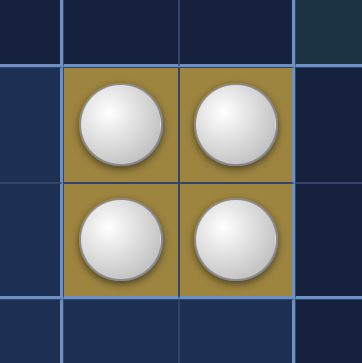
Your aim is to fill a 2×2 target square marked with a thick border using your own pieces.
A match consists of 4 rounds, and the points add up from round to round.
How a round works
- Placement phase: you take turns placing pieces on empty cells.
- Movement phase: you take turns making one move.
- The round ends when someone completes a target square or blocks the opponent.
Movement
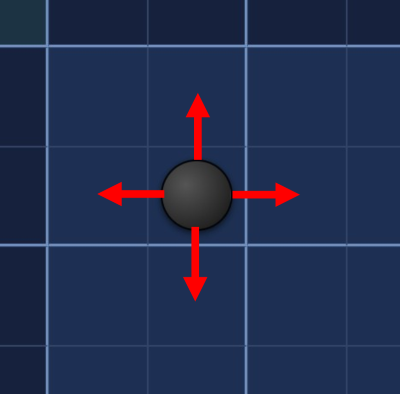
On each turn, you may move one of your pieces to an adjacent empty cell horizontally or vertically.
Scoring
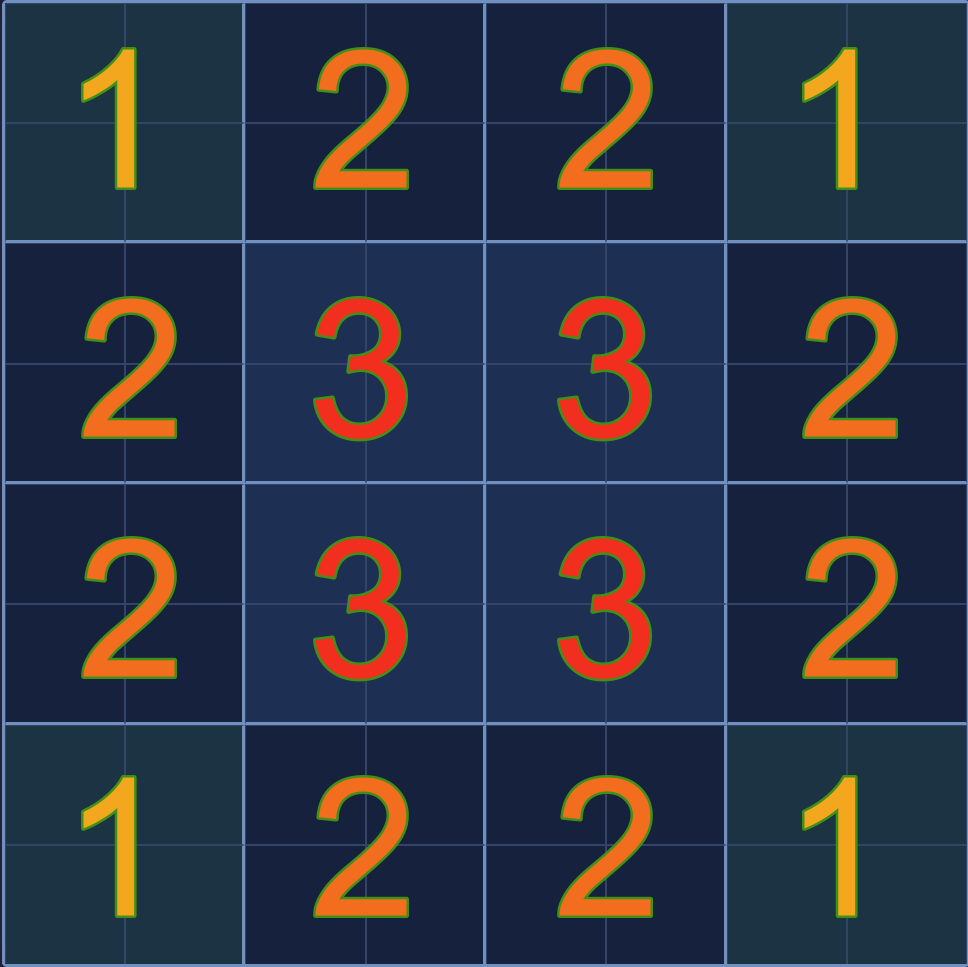
- Central fields (4 total): 3 points
- Corner fields (4 total): 1 point
- Other fields: 2 points
- Block win: 1 point
- Time expired: 0.5 point. From the first piece placed, the game automatically tracks thinking time, and if nobody reaches another winning position before the limit, the player who spent less total thinking time wins.
Start the free, no-registration match right here.
Try itMedium
All Easy rules apply, plus jumping.
Jumping
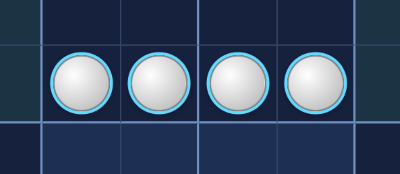
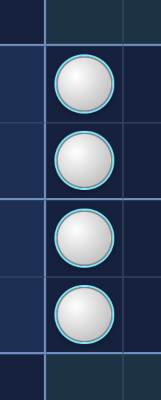
If you place at least 4 of your own pieces next to each other horizontally or vertically, then on your next turn you may jump with one of them to any empty square on the board.
Scoring
- Central fields: 3 points
- Corner fields: 1 point
- Other fields: 2 points
- Block win: 2 points
- Time expired: 0.5 point. From the first piece placed, the game automatically tracks thinking time, and if nobody reaches another winning position before the limit, the player who spent less total thinking time wins.
Hard
All Medium rules apply, plus captures and recovery.
Capture - Diamond pattern
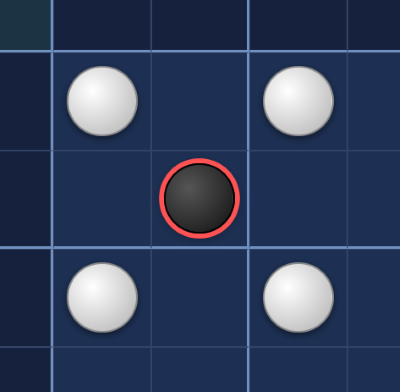
If your own pieces occupy all 4 diagonal corner cells around one opponent piece, you may remove that piece.
Capture - Cross pattern
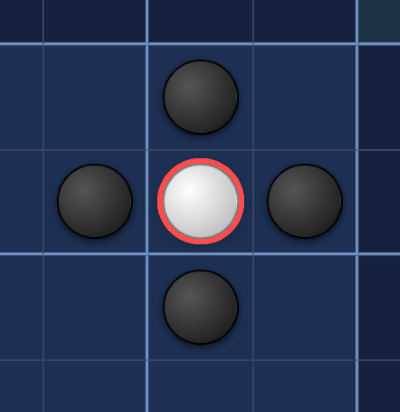
If your own pieces stand on the left, right, top, and bottom neighboring cells of one opponent piece, you may remove it.
Recovery
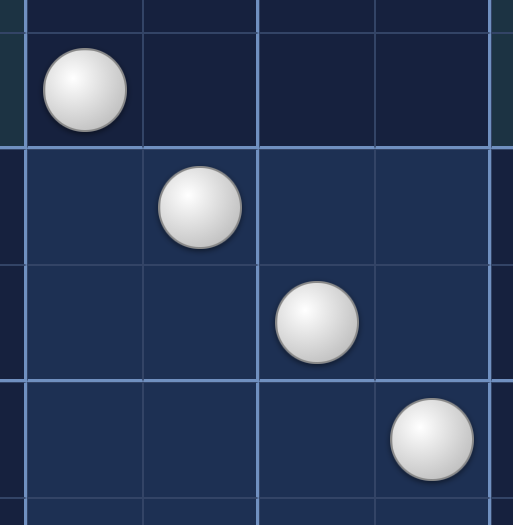
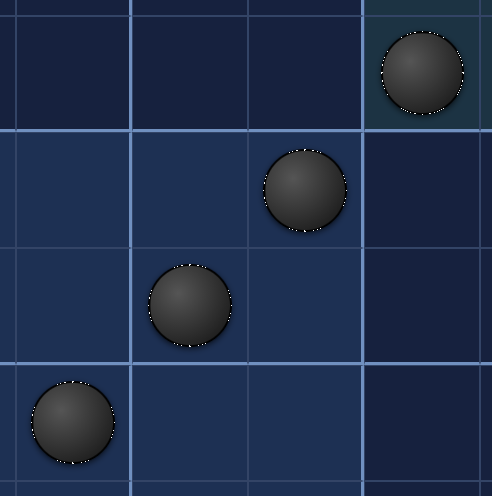
If you place at least 4 of your own pieces diagonally on neighboring cells, you may return one of your removed pieces to any empty square on the board. After the recovery, you get exactly one bonus move or jump with any legal piece before the turn passes to the opponent.
Scoring
- Central fields: 3 points
- Corner fields: 1 point
- Other fields: 2 points
- Block win: 4 points
- Time expired: 0.5 point. From the first piece placed, the game automatically tracks thinking time, and if nobody reaches another winning position before the limit, the player who spent less total thinking time wins.
- Removing 9 opponent pieces: 4 points
Strategy tips
Ready for your first round?
Open the homepage, choose a mode and start a shared-screen QuadroPlace match.